Product modules
Access Modeling
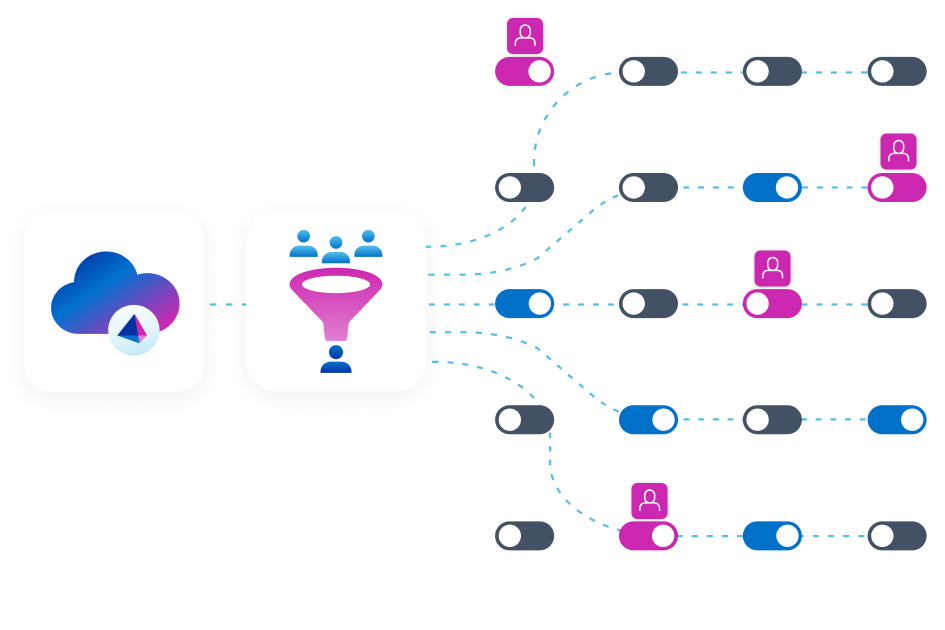
Quickly create and implement enterprise roles to support a least privilege model powered by AI and machine learning.
Challenge & solution
Simplify role management
A manual approach to optimizing roles is labor-intensive and cannot keep pace with today’s rapidly changing IT environments. You need a smarter way to create and optimize roles to securely distribute access.
Develop an efficient access model
Build and maintain user roles with machine-learning generated insights.
Bundle birthright access into roles that can be assigned to new users.
Empower users with the right access to applications and data without compromising security.
Deploy a more sustainable role model that align with your context-dependent access policies.

Benefits
The right access. Right away. Aligned to the business.
Empowering your users with the correct access is critical to business success. SailPoint provides a smarter, AI-powered way to create and optimize roles, enabling you to efficiently and securely distribute access to all applications and data.
Effortlessly manage roles with AI-driven automation.
Develop an efficient access model that aligns with your organization’s requirements and deliver precisely the right level of access to your users, enhancing both productivity and security from the start.
Advanced capabilities
Take your identity security solution even further
SailPoint defines the future of adaptive identity for the AI-driven enterprise. Our comprehensive vision and AI-powered platform empower you to secure every identity—human and non-human—transforming risk into a powerful advantage and enabling confident AI innovation.
Related resources
Discover more on access modeling
FAQ
Frequently asked questions
What is access modeling?
Access modeling is the process of creating, defining, and managing roles within an organization to ensure users have the appropriate level of access to resources, based on the principle of least privilege. It leverages advanced technologies like AI and machine learning to analyze user behavior, access patterns, and organizational needs, enabling the development of both common and specialized roles. By continuously monitoring and refining these roles, access modeling ensures that access remains secure, efficient, and aligned with the evolving demands of the business. This approach not only enhances security by minimizing over-provisioning but also streamlines operations, reduces manual effort, and supports faster onboarding and role adjustments.
Why is role management important for security?
Role management is critical for security because it ensures that users have access only to the resources they need to perform their jobs—nothing more, nothing less. This minimizes the risk of access creep, where users accumulate unnecessary permissions over time, which can lead to vulnerabilities and potential security breaches. By enforcing the principle of least privilege, role management helps limit the potential damage from insider threats or compromised accounts.
Additionally, effective role management is a cornerstone of a Zero Trust security framework, which operates on the principle of "never trust, always verify." It ensures that access is granted based on strict verification and contextual factors, such as user roles, behaviors, and the sensitivity of the resources being accessed.
What reporting capabilities are essential in a compliance management solution?
Essential reporting capabilities in a modern compliance management solution are foundational for maintaining audit readiness and enabling informed, data-driven security decisions. These features transform raw access data into actionable intelligence, allowing organizations to demonstrate control and accountability.
Key reporting functions include:
- Audit-ready reporting: The system must generate comprehensive, out-of-the-box reports specifically designed to satisfy common regulatory requirements like SOX, HIPAA, and GDPR.
- Customizable dashboards and visualizations: A single, static view is insufficient for a dynamic enterprise environment. IT leaders require customizable dashboards that provide a holistic, real-time overview of the organization's compliance posture. Data visualizations are critical for quickly identifying high-risk users, orphaned accounts, or systemic policy violations that might be missed in traditional spreadsheet-based analysis.
- Detailed certification and attestation records: A crucial capability is the ability to produce a clear, auditable trail for all access certification campaigns. This includes tracking who approved, rejected, or revoked access, when they did so, and any justifications provided.
Can access modeling help with compliance?
Yes, access modeling can significantly aid in achieving and maintaining compliance. By establishing clear, well-defined roles, organizations can ensure that access to sensitive data and systems is appropriately restricted and aligned with regulatory requirements. This structured approach simplifies the process of demonstrating compliance with regulations like SOX, HIPAA, and GDPR, as access rights are not only well-documented but also continuously monitored and updated.
Access modeling provides a transparent and auditable framework for managing who has access to what, reducing the risk of unauthorized access or data breaches that could result in non-compliance penalties.
Contact us
Put identity security at the core of securing your business