Agent Identity Security
Take control of every AI agent
See how SailPoint brings order to chaos with the visibility and control needed to secure this fast-moving, high-risk identity type.
Challenge & solution
Why AI agents need governance
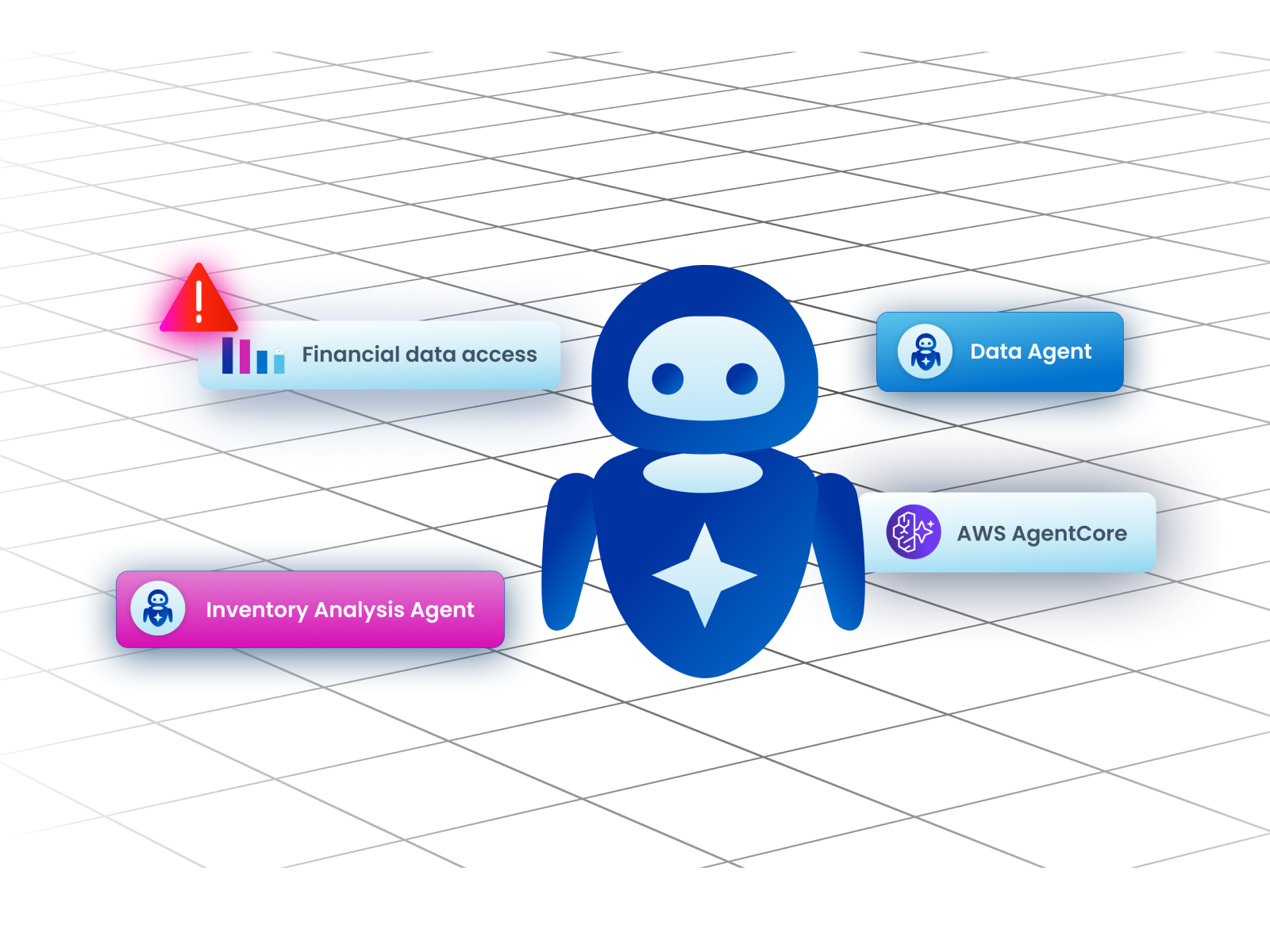
AI drives innovation but introduces risks. Without governance, AI agents create security, audit, and operational vulnerabilities.
AI agent identity gaps
- AI agents handle sensitive information and can reveal credentials, leading to data leaks
- Many AI agents are over-permissioned or unknown to your organization
- Without controls, AI agents can violate global regulations
- AI agents often act autonomously with broad access, posing as insider threats if unmonitored
Unified AI agent governance
- Aggregate AI agents from clouds and agent platforms such as AWS, Azure, and Google Cloud Platform (GCP), and Salesforce
- Keep ownership aligned with role changes using automated updates
- Support multiple owners for shared accountability on machine identities
- Review AI agents’ access and revoke as needed

Use cases
Secure AI with SailPoint
Agent Identity Security has evolved into SailPoint Agentic Fabric, unifying AI agents, their users, and the tools they access in one governed view.
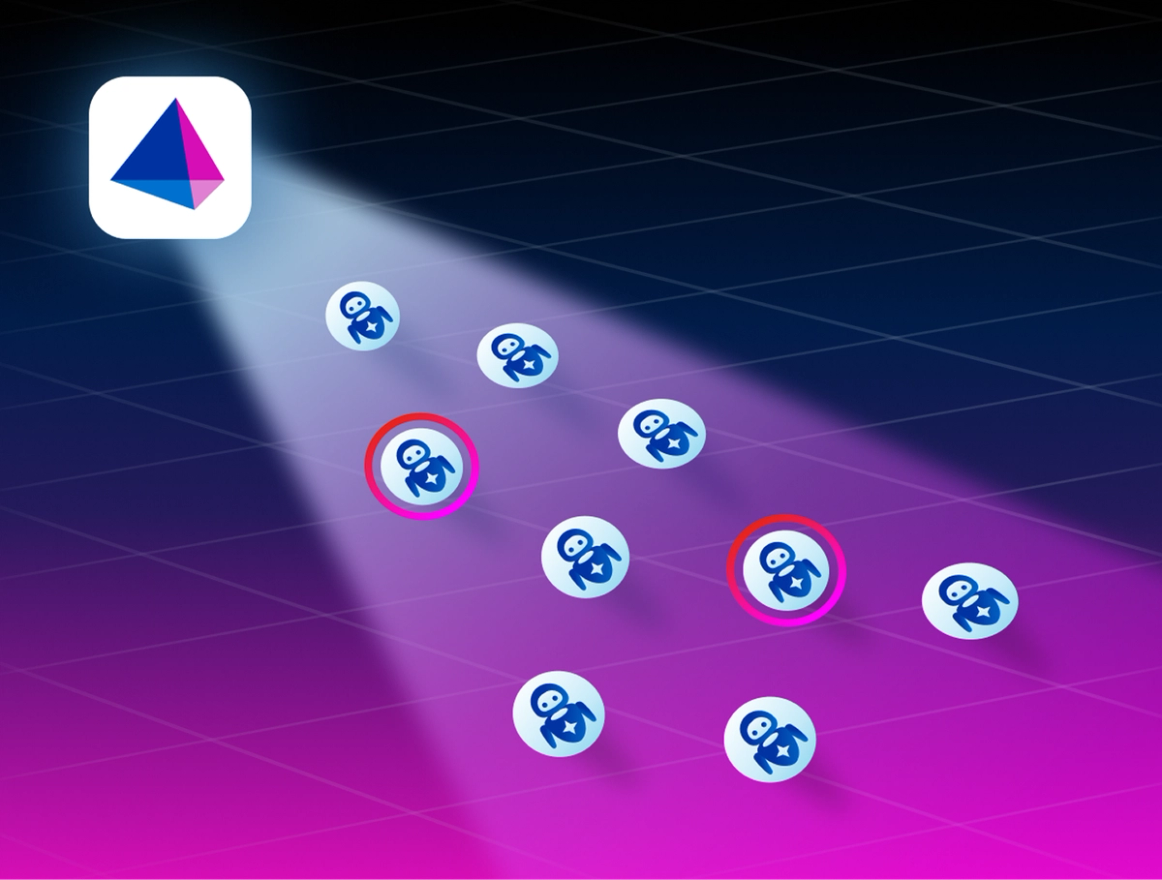
Eliminate risk from shadow AI
When employees use unmonitored AI tools, they introduce "Shadow AI"—a critical risk to your sensitive data and compliance posture. SailPoint gives you the visibility to see these hidden interactions and the control to remediate risk, guiding users to secure alternatives and ensuring your AI landscape is governed and safe.
All your AI agents in one place
Directly connect to AWS, Azure, Google Cloud Platform (GCP), Salesforce, and other systems to automatically onboard AI agents and other NHIs. Each agent is registered with a unique identity enriched with full business and access context, enabling rapid governance and security from day one.


Assign clear ownership to every AI agent
Designate one or multiple human owners for each AI agent to ensure accountability and traceability. By anchoring agents within established organizational structures, ownership provides the foundation for accurate access reviews and informed decision-making. With built-in succession planning, ownership remains secure and seamless- even as roles shift or responsibilities change- so governance never falls through the cracks.
Prove AI agent access is appropriate
Regularly review AI agents’ access to ensure it aligns with business needs and security policies. Quickly identify and revoke inappropriate or excessive permissions to reduce risk. Extend oversight further by detecting when human identities gain new entitlements or data access through AI agents, giving you full visibility into both direct and indirect access pathways.

See SailPoint in action
Explore on your own
Take a self-guided tour of SailPoint's identity security platform
Take product tourRelated resources
Explore more on securing agentic AI
FAQ
Securing AI with SailPoint: What to know
What is an AI agent identity?
An AI agent identity represents a system that autonomously performs tasks to achieve goals, make decisions, and drive actions based on available data and tools. Also known as agentic AI, or simply AI agents.
AI agents interact with its environment, collect data, and use the data to perform tasks that meet pre-determined goals. Although humans set the goals, an AI agent independently chooses the actions it needs to perform in order to achieve those goals.
How are AI agent identities different from human and machine identities?
Human identities are tied to employees or contractors and enriched with context like role, manager, and employment status. Machine identities, by contrast, lack that structure—they don’t follow HR processes, often lack clear ownership, and are rarely reviewed once created. This makes them more difficult to govern and more attractive to attackers.
AI agents also carry identities, but their nature is distinct. While humans, machines, and AI agents all access resources and require authentication, AI agents introduce new patterns of creation, ownership, and usage. Governing them effectively requires approaches tailored to their unique behaviors and risks.
Why do AI agent identities pose such a big security risk?
AI agents often handle sensitive information, such as financial or customer data. Without governance, they can access unauthorized systems or be tricked into revealing credentials, leading to data leaks. This is exacerbated by over-permissioning, where agents become high-privilege actors with unmonitored access to critical networks. Overall, data privacy remains the top obstacle for organizations adopting AI agents.
Additionally, traditional security models break down with AI agents, as they execute non-deterministic actions, making them prime targets for exploitation or hacking.
What type of risks do AI agents pose?
Without proactive measures, agents amplify existing issues, turning potential strategic assets into liabilities:
- Agents may mishandle sensitive data or make misaligned decisions.
- AI agents can violate regulations leading to fines and legal actions.
- AI agents act as autonomous "digital insiders" with broad access, posing insider threats if unmonitored.
- Incidents from ungoverned agents can harm an organization's reputation and cause operational chaos.
How does ownership work for AI agent identities?
Agent Identity Security allows you to assign and document ownership for each AI agent, something most organizations struggle to do today. Identities can be aggregated from clouds and agent platforms, including AWS, Microsoft Azure, Google Cloud Platform (GCP), and Salesforce. One or multiple owners can be assigned as the owner of each agent.
This ownership data is maintained for audit purposes and succession planning, so that when an owner changes roles or leaves the company, ownership can be quickly reassigned without losing visibility or control.
Can SailPoint manage human, non-human, and AI agent identities together?
Yes. SailPoint lets you assign and document ownership for each AI agent — something most organizations struggle to do today. Identities are aggregated from clouds and agent platforms, including AWS, Microsoft Azure, Google Cloud Platform (GCP), and Salesforce. One or multiple owners can be assigned to each agent.
Ownership data is maintained for audit purposes and succession planning, so when an owner changes roles or leaves the company, ownership can be quickly reassigned without losing visibility or control.
Does SailPoint govern the tools that AI agents use?
Yes, SailPoint allows you to govern the service accounts, credentials, and secrets that each AI agent utilizes, from creation to retirement. For example, an AI-powered HR chatbot uses service accounts to connect to systems that hold sensitive employee data. Without proper tool governance, the accounts, credentials, and secrets that the AI agent utilizes could become risks or targets for attackers.
Does SailPoint have an MCP server?
Yes! SailPoint MCP server enables organizations to extend identity security into AI-native environments by enabling secure interaction between third-party AI agents and the SailPoint platform. The MCP server provides a standardized bridge that translates agent requests into SailPoint API calls, supporting automation, auditability, and governance at scale.
Ready to take the next step?
Put adaptive identity to work
See how SailPoint sets the standard for identity security—helping enterprises reduce risk, scale with confidence, and stay ahead of what’s next.